Shiga News – by Philbert Ono Rotating Header Image

Otsu

Daidogawa Dam construction to be frozen

On Mar. 31, 2009, in a rare turnabout of policy, the Construction and Transport Ministry announced that it would freeze construction of Daidogawa Dam (大戸川ダム) in Otsu. The decision was made in consideration of opposition to the dam by the governors of Shiga, Kyoto, Osaka and Mie prefectures. The ministry had stated that the dam was needed to prevent any great flood that may occur. The affected municipalities (Otsu and Uji in Kyoto) and residents who had to move out of the area to be dammed, however, are in favor of the dam.

Major sponsor exits Lake Biwa Mainichi Marathon

Held annually for 64 times since 1946, the Lake Biwa Mainichi Marathon is losing a major sponsor after March 1, 2009. Kyoto-based electronic parts maker ROHM Co., Ltd. has stated that it will no longer be a sponsor of the marathon after the 64th race on March 1, 2009. The company had shouldered about half the cost of holding the marathon.

The 42-km men-only marathon is held on the first Sunday of March mainly in Otsu, with part of the route in neighboring Kusatsu. The city of Otsu contributes 15 million yen, while Shiga Prefecture shells out 30 million yen to the hold one of Japan’s oldest marathons. With ROHM gone, officials are scrambling to find ways to make up for the shortfall and continue holding the marathon.

The marathon has seen numerous famous runners in the past, including winners Abebe Bikila in 1961 and 1965, Frank Shorter in 1973, and Toshihiko Seko in 1988. To qualify to enter the race, you must have recently run a full marathon within 2.5 hours.

http://www.lakebiwa-marathon.com/index_e.html

Otsu Matsuri

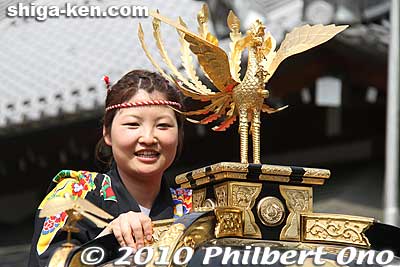
Held on Oct. 11-12, 2008, this is another major float festival in Shiga where they display and pull ornate floats along the city streets. I went to see both the festival eve called Yoimiya when they display the floats on the streets at night. The floats are lit up with lanterns and musicians also play.

On the next day, they had the procession through central Otsu.

Unique features of the festival:

  • The floats have three wheels (like a tricycle) instead of four wheels.
  • Mechanical karakuri dolls on the floats perform.
  • They throw chimaki good luck charms from the floats.

Check out my photos and videos:

 
Photos: http://photoguide.jp/pix/thumbnails.php?album=29

Monkeys plague Sakamoto, Otsu

Wild Japanese monkeys have been invading residential areas in Sakamoto in western Otsu, making a mess of backyard gardens. Saikyoji temple’s cemetary is also a favorite spot for the monkeys where they eat flowers and edible offerings.

The city of Otsu announced that they captured 29 of the monkeys by March 26, 2008. Based on Mt. Hiei, the group of monkeys had numbered over 40.

Biwako Bunkakan shuts down on March 31, 2008

The Lake Biwa Cultural Museum (Biwako Bunkakan 琵琶湖文化館), shaped like a castle on the shore of Lake Biwa in Otsu, closed on March 30, 2008 after 47 years. Admission was free on the last day. The museum opened in 1961 and served as an art museum, centering on Buddhist art, and aquarium for lake fish. Parts of the museum’s collection were later transferred to other museums in Shiga. Its collection of about 5,000 pieces includes National Treasures and Important Cultural Properties. The lookout deck on the top floor gave a panoramic view of the lake. The rooftop also had a dragonfly sculpture. Due to financial reasons, the cash-strapped prefecture decided to close the museum which will continue to store its collection.

Millennium of the Tale of Genji

Click image to see more photos.

Otsu is celebrating the Millennium of the Tale of Genji 源氏物語千年紀 (Genji Monogatari Sennenki) with various exhibitions and events mainly at Ishiyama-dera temple from Mar. 18 to Dec. 14, 2008.
An event venue called Genji Yume-kairo 源氏夢回廊 (main path leading to the temple entrance) at the temple has a few temple buildings holding various exhibitions related to the novel. Admission is 600 yen or 1,000 yen which includes admission to the temple.
I saw it March and here are my pictures: Ishiyama-dera Temple 石山寺
It was in 1008 when Lady Murasaki completed the epic novel Genji Monogatari after four years. She wrote it in a little room with a view of the moon at Ishiyama-dera in Otsu. The temple itself is a major tourist attraction with National Treasure buildings, spring lfowers, and autumn leaves.

New train station names in Otsu

Two train stations on the JR Kosei Line have been renamed:

Nishi-Otsu Station (西大津駅) changed its name to “Otsu-kyo” 大津京駅 on March 15, 2008. This is an attempt to have people recognize that Otsu was once the capital of Japan.
Ogoto Station (雄琴駅) changed its name to “Ogoto Onsen” おごと温泉駅 on March 15, 2008. This is an attempt to get more people to visit Ogoto Spa. The station also has a free foot bath with hot spring water where you can relax your feet.
Changing the train station names cost Otsu taxpayers a total of 110 million yen paid to Japan Railways.

Event notice: Shiga ALT art exhibition at 琵琶湖文化館

Shiga’s Assistant Language Teachers (mainly English) are having an art exhibition at the Biwako Bunkakan. About 16 teachers are exhibiting paintings, photography, etc., during March 20-23, 2008. 

It is on the 1st floor of the museum. Hours: 9 am – 5 pm. Free admission. 

I also have my Lake Biwa Rowing Song pictures on display as well. I will be there on Sunday the 23rd (last day) from 3 pm to 5 pm. If you have time, please visit us. 

The museum is near Shimanoseki and Ishiba Stations on the Keihan Line. 

As you may know, the museum will close down at the end of this month. If you’ve never been to this museum, this is your last chance. It has a lot of Buddhist art, including National Treasures. The top floor also has nice views of the lake. This museum has been a landmark in Otsu for many years (since 1961). I think they will keep the building, but it will be closed to the public. 

Web site: http://www2.ocn.ne.jp/~biwa-bun/

Governor Kada sings in English

なんと嘉田知事も飛び入りして英語版「琵琶湖周航の歌」を歌う!光栄でした。

On Oct. 20, 2007 (Sat.), an event called Umizukuri Boat Festa 湖づくりボートフェスタ was held. It was a dragon boat and canoe race between Otsu (near Ishiyama) and Ogoto.

After the race ended, a mini concert featuring cute kids playing the よし笛 reed flute (made from reeds in Biwako) was held in Ogoto (Opal) next to the lake shore. Jamie Thompson sang Biwako Shuko no Uta in English as they played the song with the flute. (Her twin sister could not attend and neither could I).

And then a surprise. Shiga Governor Kada Yukiko went on stage and began singing in English with Jamie!! (See photos above.)

Wow, what a great honor. She’s a real people’s governor.

Event flyer:

http://setarc.jp/2007/08/umizukuri/info.pdf

Emperor and Empress visit Shiga

Emperor Akihito and Empress Michiko visited Shiga Prefecture for the first time in 13 years during Nov. 10-13, 2007. The main reason was to attend the 27th Zenkoku Yutaka na Umizukuri Taikai (National Convention to Make Bountiful Oceans 第27回全国豊かな海づくり大会) held in Otsu.
On the first day, they visited a nursing home called Care Town Karasaki in Otsu. Some 20 patients there sang Biwako Shuko no Uta (Lake Biwa Rowing Song) for the Imperial couple and the Emperor demanded an encore for them to sing it again. It is Shiga’s most famous song.
On the second day the 11th, they attended the formal opening ceremony of the National Convention to Make Bountiful Oceans held at the lakeside Biwako Hall in Otsu. In his speech, the Emperor reflected, “It hurts my heart that the blue gill fish I brought to Japan from America for human consumption is now damaging the ecosystem of Lake Biwa.” In 1960 as Crown Prince on a trip to the U.S., the Emperor brought back the blue gill fish given to him in Chicago, Illinois and intended it to be raised in Japan for human consumption.
Some of the blue gill subsequently escaped from a research facility and entered Lake Biwa. The fish multiplied rapidly during the 1990s. Since it eats the baby fish of native lake fish found nowhere else in the world, the blue gill (and black bass) has become a major ecological problem in the lake. After the formal ceremony, the Emperor and Empress went outside the lakeside hall and released baby fish of native lake fish into the lake. Some of the ceremonial pomp included water-spraying fireboats and fishing boats sailing in a procession on the lake. The convention also had pavilions and booths in the Hama-Otsu area for the public to become more aware of fisheries in Lake Biwa.
After the convention, the Imperial couple took a boat ride to Karasuma Peninsula in Kusatsu to visit the Lake Biwa Museum. On the 12th, they visited Shigaraki Ceramic Park and the ruins of Shigaraki-no-Miya which was a detached palace of Emperor Shomu.
On the 13th, they visited Enryakuji temple on Mt. Hiei and returned to Tokyo via shinkansen train from Kyoto Station. It must have been a spectacle to see Shinto’s highest-ranking priest (the emperor) paying a visit to the headquarters of one of Japan’s largest Buddhist sects. Shiga Governor Kada Yukiko accompanied the Emperor and Empress during their tour in Shiga.

Biwako Shimin Regatta

This coming Sunday, there will be a citizens’ regatta (rowing boat race) on Seta River near Seta Karahashi Bridge. 

It will be all day long from 9 am to 4 pm. Many rowing teams will race down the river for 250 meters.

The 本部 (headquarters) will be on the east side of the river near Seta-Karahashi Bridge. Map: 
http://setarc.jp/2007resident/map.png 

They will also sell my Lake Biwa Rowing Song CD for 800 yen. I will also be there most of the time to help sell the CD. So if you have time on Sunday, please drop by and say hello. 

My CD will also be one of the prizes awarded to all the 1st, 2nd, and 3rd place winners of the regatta in all race categories. (Total of 75 winners.) 

Web site: 
http://setarc.jp/2007resident/point/

Visited Otsu International Goodwill Association

During the past 2 weeks, I’ve been visiting most of Shiga’s cities to introduce our Lake Biwa Rowing Song CD to the local Boards of Education, international organizations, tourist associations, public libraries, etc. 

Today, I went to Otsu and visited the Otsu International Goodwill Association 大津市国際親善協会 for the first time. They have a very nice and spacious space in the Asuto Hama-Otsu 明日都 building next to Hama-Otsu Station. It’s very nice. They have three big rooms, one is the office, one room is a classroom, and one room is a nice salon with chairs and tables and books and magazines. Anyone can go in there and read a book, etc. The room is also used for language classes. 

Out of all the 国際交流協会 offices I’ve visited in Shiga, this place is by far the most spacious and impressive. It’s a good place to relax or meet a friend. They are lucky to have such a space. 
http://www.otsu-intl.or.jp/

Seta Rowing Club

ボート体験教室 

Seta Rowing Club

Seta Rowing Club

This past Sunday, I visited the Seta Rowing Club 瀬田漕艇倶楽部 near the Lake Biwa Rowing Course 琵琶湖漕艇場. They offer a 2-hour rowing lesson every Sunday during non-winter months. 

First they show you a video about rowing. Then they teach you how to use the rowing machine called “ergo.” Then we boarded a sleek race boat and rowed. It was my first time to row on such a boat. We rowed all the way to the shinkansen tracks in Seta River. It’s very fast. 

See pictures here: 
http://photoguide.jp/pix/thumbnails.php?album=383 

It’s quite good exercise and interesting experience. I highly recommend this rowing club. 
http://www.setarc.jp/info/school/

Otsu’s summer festivals

For the first time, I went to see the Otsu Natsu Matsuri last month. I was surprised to see the new Shiga Governor Yukiko Kada. I got a good picture of her dancing too: 
http://photoguide.jp/pix/displayimage.php?album=369&pos=13 

I also went to see the Biwako Fireworks for the first time. I was very upset by the many barriers and walls they put up near Hama-Otsu. That whole area was for reserved spectator seats. They were charging 2,000 yen or more. So we had to walk all the way to the free area toward the Prince Hotel. The fireworks was good, but I left about 30 min. early to avoid the large crowds going home. The closest station was the small little Shimanoseki Station on the Keihan Line. I cannot imagine how crowded it became after the fireworks ended.